With early voting ending this Sunday, November 1 and the grand finale happening on Tuesday, November 3—don’t forget to flip your ballot! From outdoor dining and bike lanes to street safety projects and construction permits, plus, NYC’s “Rainy Day Fund, here’s why voting, “Yes,” or “No” on the five ballot proposals could affect you long after election day.
The proposals would change the NYC Charter, the legal framework that defines the powers and responsibilities of the mayor, City Council and municipal agencies, and establishes procedures for decisions involving public services, spending and city property.

Amending it can alter how city agencies approve projects, award contracts and manage public funds. Voters can approve or reject the proposed changes through ballot questions.
The proposals were developed by a commission created by a 15-member panel assembled by Mayor Zohran Mamdani, dubbed the Commission on Government Efficiency, or COGE. Sounds familiar? Remember President Donald Trump’s DOGE (Department of Government Efficiency), managed under the tutelage of Elon Musk?
According to supporters such as the NYC Hospitality Alliance and pro-housing group, Abundance New York, the first four proposals would make it easier to start construction projects and hire city contractors, and the fifth would require the city to make a plan to set aside more money in its “Rainy Day Fund.” As reported in an October 26 article in The New York Times: “What to Know About the 5 Proposals on the Ballot in New York City”: many of the mayor’s allies support the proposals, especially those who want to build more housing quickly.
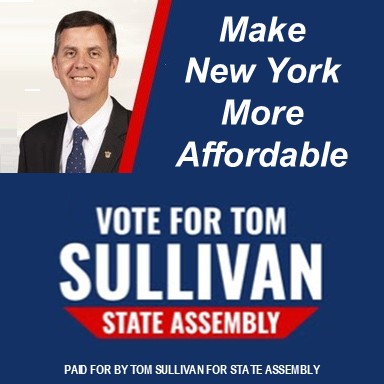
Republicans oppose all five measures. For example, at last Thursday’s rally for NYS Assembly District 23 GOP hopeful Tom Sullivan, Rockaway Republican Club President Mary Glynn opined, “We should vote, ‘No,’ on all five proposals. Anytime you vote, ‘Yes,’ it’s just more money out of our pockets.” In an October 27 op-ed, “Send Mamdani A Message — Vote ‘NO’ On All Five NYC Ballot Proposals,” The NY Post editorial board stated: “One ballot proposal would enable the DOT to move ahead with street redesign plans that ignore the needs of families, small businesses, seniors and people with disabilities without community input or City Council oversight… But the substance matters little when Mayor Zohran Mamdani and his minions are illegally ‘weaponizing’ a $1.6 million taxpayer-funded ad campaign to push ballot questions that will vastly increase his grip on Gotham.”
Some civic groups, including community boards, oppose some of the proposals, arguing that they limit public participation or do not go far enough to strengthen the city’s budget reserves.
Longtime impassioned vocal community activist, John Cori, a member of Community Board 14, said, “I’m a registered Independent, and voting, “No,” on all five of these proposals.
“I say suspend the whole thing. The city should do a better job at explaining all these proposals. The information I’ve read is way too convoluted for the general public, and even me, who’s really done the research. I have a major issue how each of these proposals takes away from community’s input.”
Mamdani has been promoting the proposals with his trademark TikTok videos, encouraging New Yorkers to vote on faster government. Note that the city charter bars government advocacy for or against ballot proposals.
Here’s a breakdown of the five ballot proposals from opposing perspectives:
PROPOSAL 1: Speed Up Process for Granting a Revocable Consent to Use Public Space
This proposal addresses the process to use public space for uses such as ramps, planters, bus shelters and cafes. Currently, the City Council can vote to reject a permit for a sidewalk cafe even if the city approves it.
PRO: This simplifies the process by removing mandatory hearings and the City Council’s disapproval of sidewalk cafes, while maintaining community and Council input. If the measure passes, public hearings would no longer be required, and the Council could no longer reject a permit.
CON: Opponents argue that the measure would disempower community groups from weighing in.
PROPOSAL 2: Reduce City Contractor Paperwork; Require Regular Meetings of Procurement Policy Board
The proposal would authorize the Procurement Policy Board, the body responsible for establishing City contracting rules, to simplify the questionnaire businesses and nonprofits must complete to qualify for contracts. The mayor’s office would have more power over approving contracts.
PRO: Watchdog group, Common Cause, argues that it will reduce administrative loopholes for small businesses and nonprofits.
CON: On Fox 5 NY program’s “Politics As Usual,” Brooklyn GOP Committee Chairman Liam McCabe, said, “The city already spends billions of dollars on outside contracts. This is another example of another power grab by the mayor.”
PROPOSAL 3: Speed Up Street Safety Projects, Disposition of Unused City Property, Office Leasing
It’s purported that this proposal would streamline approvals for street safety projects, including bike lanes, bus lanes, pedestrian islands and other roadway improvements. It would also change procedures for disposing of certain city-owned properties and leasing office space for municipal workers.
PRO: Proponents argue that the city could build bus and bike lanes more quickly, plus sell city-owned properties more easily.
CON: Opponents like Cori assert: “This is giving agencies like the DOT crazy, broad discretion on what they deem as an emergency, regardless of what the community, the people who live here know. Do you know anybody who signed on for the “City of Yes,” who’s not now questioning their decision? Maybe a developer or nonprofit would benefit, but what about the community? What about the city’s proposed metered-parking on Shore Front Parkway? Where is the community input?
PROPOSAL 4: Simplify Building Permitting and Move Waterfront Permitting to Department of Buildings
Currently, developers and property owners need approvals from numerous city agencies before they can begin construction. The proposed hub would bring about 40 construction permits from 18 offices and agencies into one centralized point of entry for the permitting process.
PRO: Pro-housing groups like Abundance New York believe this proposal will streamline the process.
CON: According to the New York Times, Warren Schreiber, the president of the Queens Civic Congress, said that the measure would provide, “shortcuts that could reduce scrutiny” of building projects.
PROPOSAL 5: Set Contribution Targets for Rainy Day Fund to Promote Sufficient Budgetary Reserves
The city has a “rainy day fund” with about $2 billion set aside for an economic downturn or budget emergency. As the most controversial proposal on the ballot, this would set a target amount of money to hold in the city’s revenue stabilization fund, money set aside that the city can use in case of economic downturn or other financial hardships.
PRO: Organizations like Common Cause and Citizens Union support it, though both acknowledge it doesn’t go far enough to protect the city’s rainy day fund. Still, they argue it’s better than nothing.
CON: Don’t change it. Leave the existing rainy day fund rules unchanged. NYC Comptroller Mark Levine has advocated a target equal to 16 percent of tax revenue, above the proposal’s 12 percent benchmark.
Cori said, “The people writing these ballot proposals, are getting their information from the same people that are pushing them. The city needs to do better. There should be more community input.”
For more info about the five ballot proposals, visit: https://findmypollsite.vote.nyc/